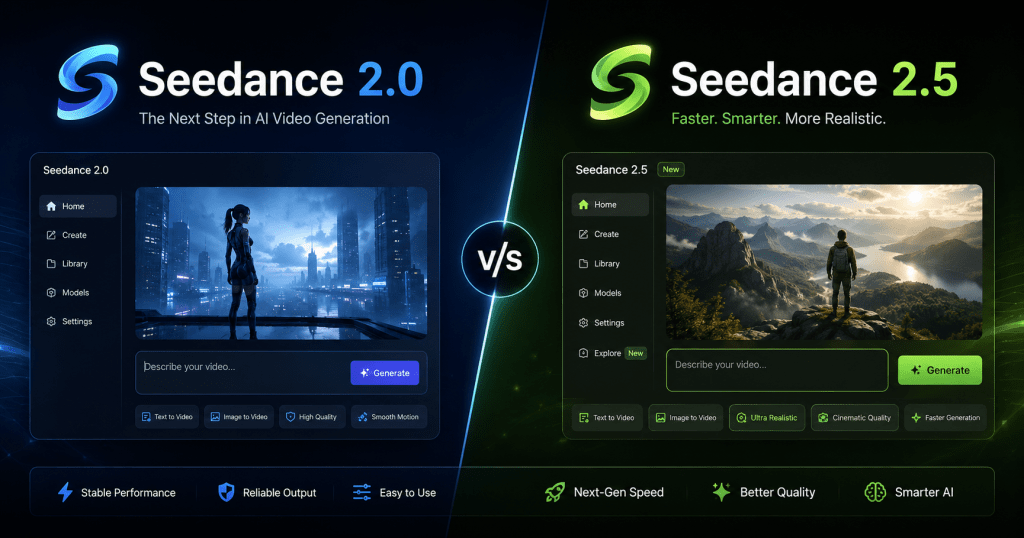
AI video generation has moved fast in the last two years, and few companies have pushed the category harder than ByteDance with its Seedance model family. If you’ve searched “seedance 2.5 vs seedance 2.0,” you’re probably trying to decide which model actually fits your workflow whether that’s short-form social content, ad production, or full narrative storytelling. This guide breaks down what changed, what stayed the same, and where each model genuinely earns its place in a creator’s toolkit.
We pulled information from ByteDance’s own Seed team documentation, hands-on reviews from creators who tested both models, and comparison breakdowns published across Medium, YouTube walkthroughs, and creator blogs. The goal here isn’t hype it’s a practical, structured comparison you can actually use to make a decision.
What Is Seedance, Exactly?
Seedance is ByteDance’s family of AI video generation models, available primarily through Dreamina (ByteDance’s creative suite, also tied to CapCut) and through third-party platforms like Topview, Renoise, and various API integrators. Unlike single-input text-to-video tools, Seedance models are built around multimodal generation meaning they can take text prompts, reference images, audio clips, and even video segments as combined inputs to produce a single coherent output.
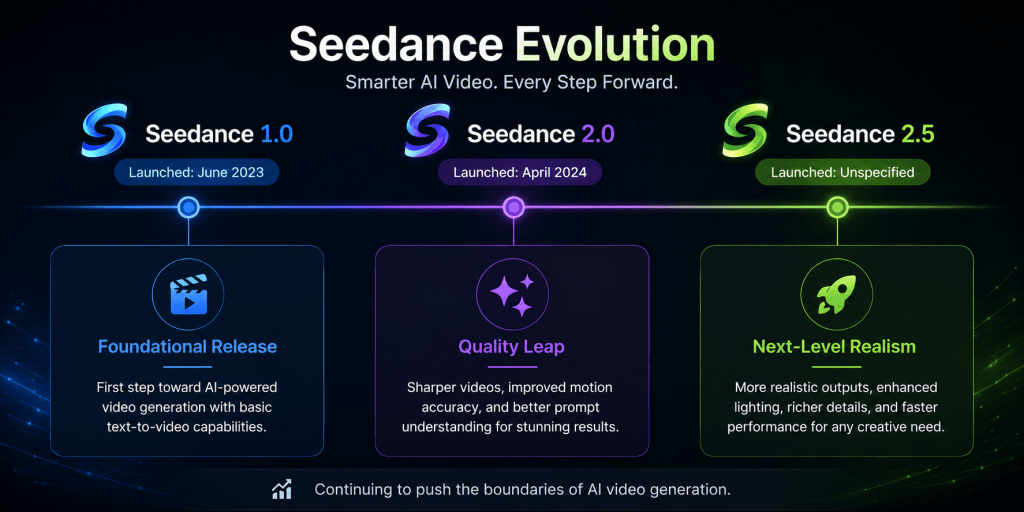
The series has moved quickly: Seedance 2.0 established itself as a serious contender against Veo, Kling, and Runway, and Seedance 2.5 pushes further into “production-ready” territory rather than quick concept demos.
Seedance 2.0: The Stable Baseline
Seedance 2.0 is documented on ByteDance Seed’s official site and is described as a unified multimodal audio-video generation model that supports text, image, audio, and video inputs. The official launch specs mention support for up to 9 images, 3 video clips, and 3 audio clips as references, alongside natural language instructions, producing 15-second high-quality multi-shot audio-video output.
Key strengths of Seedance 2.0:
- Unified audio-video generation: The model accepts text prompts, reference images, audio clips, and video segments simultaneously within a single generation workflow, reducing the need for multiple tools and complex post-production pipelines.
- Synchronized audio: Seedance 2.0 generates synchronized audio and video in a single pass, aiming for accurate lip-sync and ambient sound that matches the visual environment.
- Motion stability: The model is built to maintain consistent character identity, lighting, and scene coherence across the full video duration, even through complex camera movement and multi-character interactions.
- Availability: Multiple sources note that as of mid-2026, Seedance 2.0 is the version actually available for production work today, while 2.5 was still rolling out.
Seedance 2.5: Built for Production, Not Just Demos
Compared with Seedance 2.0, Seedance 2.5 is built for a more production-ready workflow: stronger reference-to-video generation with green screen and white model references, 30-second native generation, an ultra long video beta up to 180 seconds, up to 50 multimodal inputs, and improved editing precision.
Here’s the breakdown of what actually changed:
1. Native Clip Length: 15s → 30s (and Beyond)
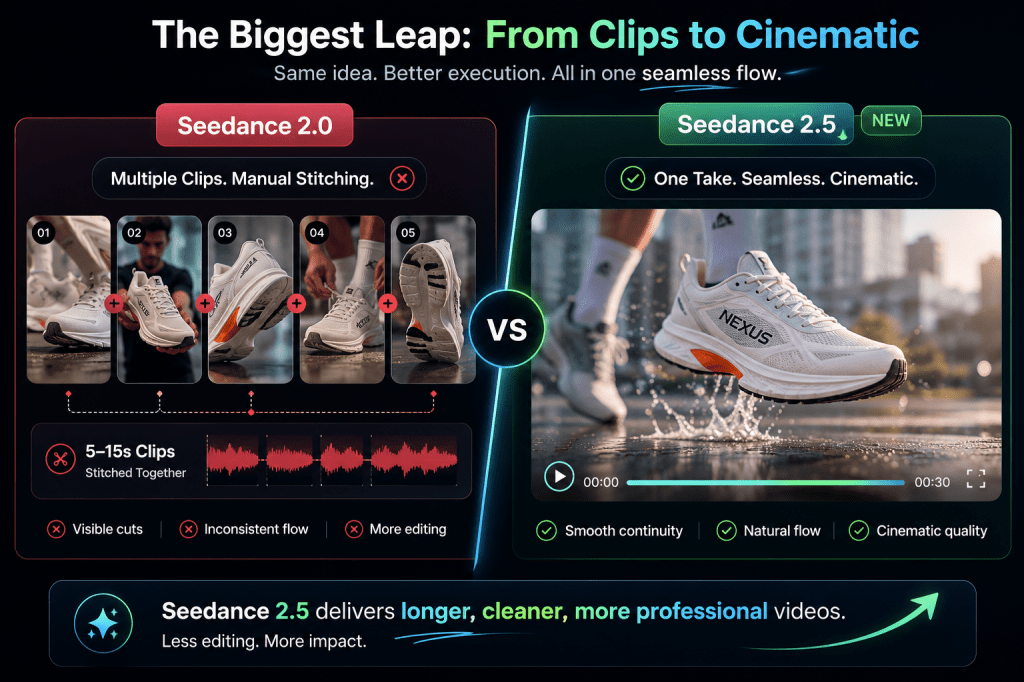
The most noticeable upgrade in Seedance 2.5 is native 30-second AI video generation, letting creators produce much longer clips without stitching multiple generations together afterward. This isn’t a cosmetic spec bump. Since the model generates a complete thirty-second sequence in one pass, it maintains a much better understanding of everything happening across the full timeline, rather than producing isolated clips that later need to be joined together.
ByteDance has stated that Seedance 2.5 generates a single, continuous 30-second shot natively, in one pass, whereas most AI video models Seedance 2.0 included top out around 15 seconds, meaning anything longer requires stitching clips together on a timeline, which invites character drift and continuity breaks at every cut.
2. Reference Inputs: 9–12 Assets → 50 Assets
Seedance 2.0 supported up to 12 mixed asset files as references, while Seedance 2.5 expands that to 50 combining text, image, video, and audio references in a single generation. In practice, this means creators can direct a scene with far more specificity: character appearance, environment, lighting, product placement, and audio cues can all be locked in simultaneously rather than negotiated through repeated prompt iterations.
3. Region-Level Editing
One of the more understated upgrades is localized editing the ability to fix a specific area or moment of a generated clip without re-rendering the entire sequence. This matters enormously for commercial workflows where a client might approve 90% of a shot but want one element (a logo, a hand gesture, a background object) adjusted.
4. Pre-Production Tools: White-Model / 3D Blockout
Seedance 2.5 introduces 3D blockout input, which lets a director pre-stage camera angles and composition with rough 3D geometry, so the generated shot follows an intended layout instead of a best guess something with no direct equivalent in Seedance 2.0. This is also referred to as a 3D white model preview, useful for testing framing and camera movement before final render.
5. Resolution and Output Quality
Seedance 2.5 targets cinematic output with 4K resolution, synced audio, and more precise camera control. Some sources caveat that full 4K support may still be rolling out in stages depending on platform, so it’s worth checking current availability before committing a production budget to it.
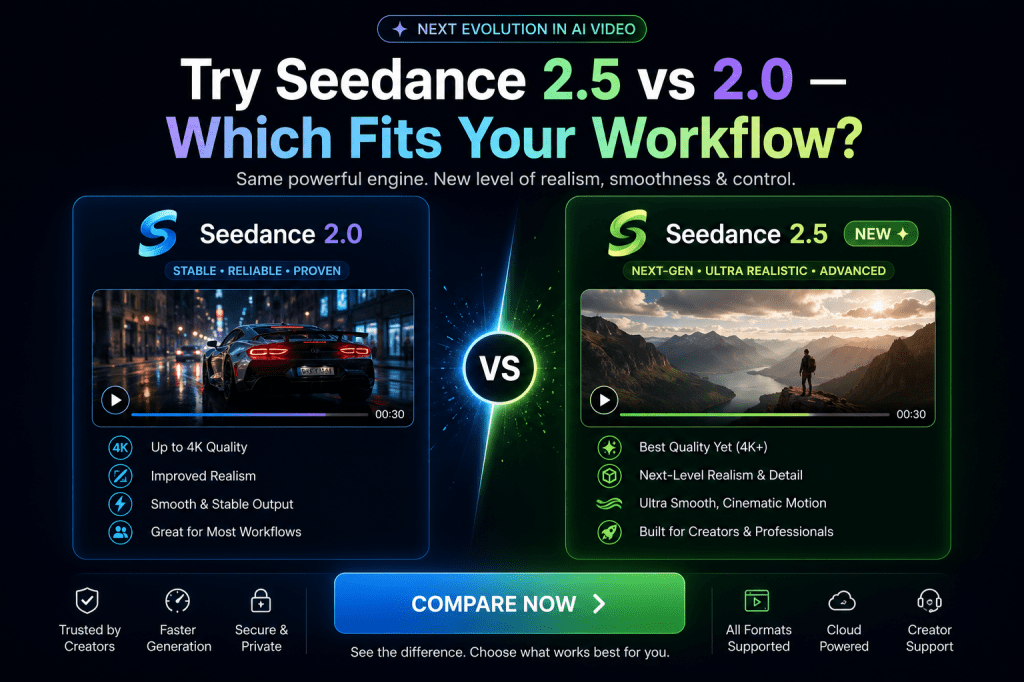
Seedance 2.5 vs Seedance 2.0: Side-by-Side Comparison
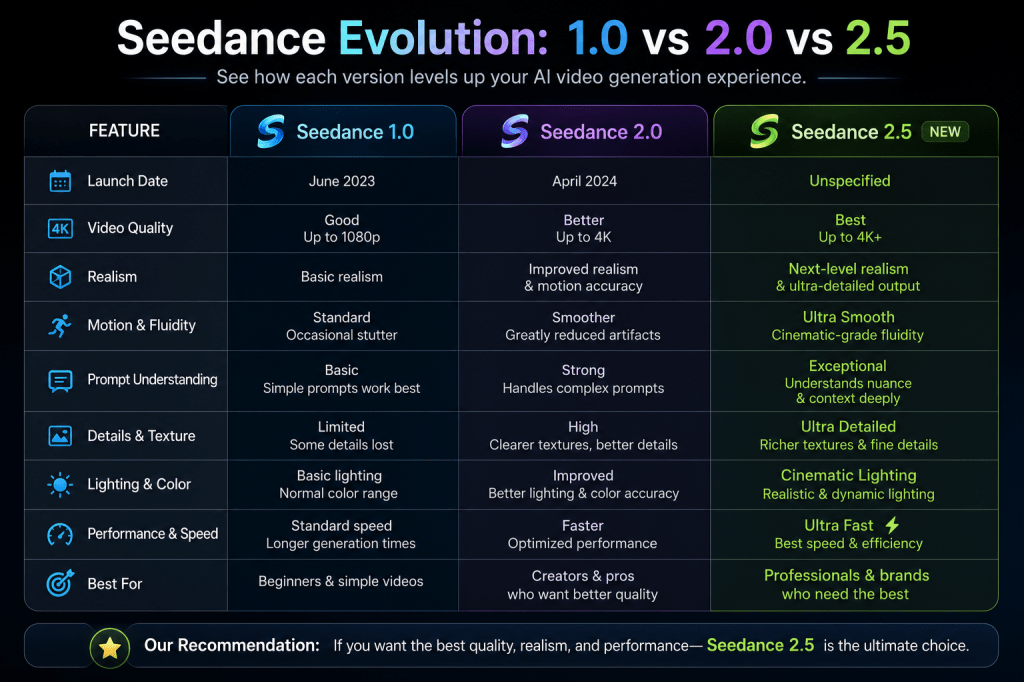
| Feature | Seedance 2.0 | Seedance 2.5 |
|---|---|---|
| Native clip length | Up to 15 seconds | Up to 30 seconds (180s ultra-long beta) |
| Reference assets | Up to 9–12 mixed files | Up to 50 multimodal references |
| Audio-video sync | Native joint generation | Improved sync + audio references |
| Editing | Full re-render | Region-level localized editing |
| Pre-production tools | None | 3D white model / blockout preview |
| Resolution | High quality | Up to 4K (rollout varies) |
| Availability (mid-2026) | Generally available | Rolling out / beta in places |
| Best for | Fast iteration, social clips | Ads, campaigns, long-form narrative |
Which One Should You Actually Use?
If you only need a short AI visual to drop into something else, Seedance 2.0 is fine. But if the goal is a complete ad, explainer, demo, or story with a real beginning, middle, and end, Seedance 2.5 is the stronger choice.
Seedance 2.5 is a meaningful upgrade with 30-second native clips, up to 50 references, and localized editing, but availability has varied by platform Seedance 2.0 has been the more consistently available model for immediate production work, with platforms integrating 2.5 as it becomes publicly accessible.
It’s also worth noting that Seedance 2.5 is expected to become available soon on UGCad AI, which is worth keeping an eye on if you’re already working within that ecosystem.
Practical recommendation:
- Choose Seedance 2.0 if you need fast turnaround, social-first content, or you’re testing concepts before committing to a bigger production.
- Choose Seedance 2.5 if you’re producing ads, product videos, branded content, or any project where continuity across a longer shot matters more than speed.
How Seedance Compares to Veo, Kling, and Runway
It’s worth zooming out. Comparing Seedance 2.5 against other leading AI video models – Veo, Kling, and Runway the standout differentiators are duration and multimodal control, with up to 30 seconds of native generation and up to 50 multimodal reference assets putting Seedance 2.5 ahead on the two dimensions that matter most for commercial production at volume.
Veo is often associated with cinematic video quality, Kling with fast generation speed, and Runway with strong creative video editing tools none of which makes any single one the universal best choice; the right pick depends on your goal, budget, workflow, and what the final video needs to do.
Common Use Cases for Each Model
Seedance 2.0 works well for:
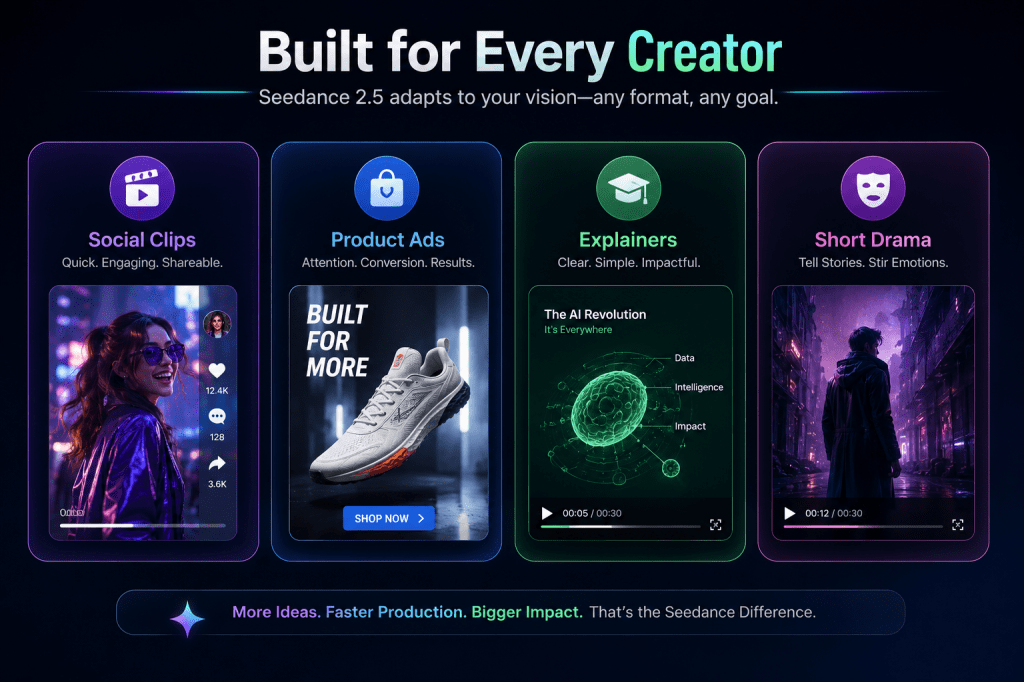
- Quick social media clips and short-form content
- Rapid concept testing before a bigger shoot
- Projects where 15 seconds is genuinely enough
Seedance 2.5 works well for:
- Full commercial ads with a narrative arc
- Product demo videos needing consistent branding across a longer shot
- AI-driven short drama / serialized content
- Any workflow where character and lighting consistency across a full scene is critical
What Most Creators Get Wrong When Comparing These Models
- Assuming “newer” means “always better for your use case.” Seedance 2.5’s biggest wins (length, reference count, editing) matter most for production work. If you’re churning out quick social clips, the overhead of managing 50 references may slow you down rather than help.
- Ignoring platform availability. Multiple sources note that Seedance 2.5 rolled out gradually across platforms like Dreamina, Topview, and Renoise so “which model can I actually access right now” is as important as which model is theoretically better.
- Underestimating prompt/reference prep time. More reference inputs means more upfront setup. Teams that don’t prepare clean reference assets in advance often see little practical benefit from the jump to 2.5.
- Overlooking the ecosystem tools around the model. The model itself is only part of the equation the platform you use it through (Dreamina, Topview, Renoise, etc.) affects your actual workflow speed and output quality just as much as the underlying model version.
Final Thoughts
The move from Seedance 2.0 to 2.5 isn’t a simple version bump it reflects a broader shift in AI video generation from “quick demo tool” to “production pipeline component.” Longer native clips, dramatically more reference inputs, localized editing, and pre-production planning tools all point toward the same goal: making AI-generated video reliable enough to use in real commercial workflows, not just as a novelty.
If your work depends on speed and volume, Seedance 2.0 remains a very capable, more widely available option. If your work depends on control, consistency, and longer-form storytelling, Seedance 2.5 is worth the extra setup effort.



Leave a comment